

Beschreibung
What this book helps you do
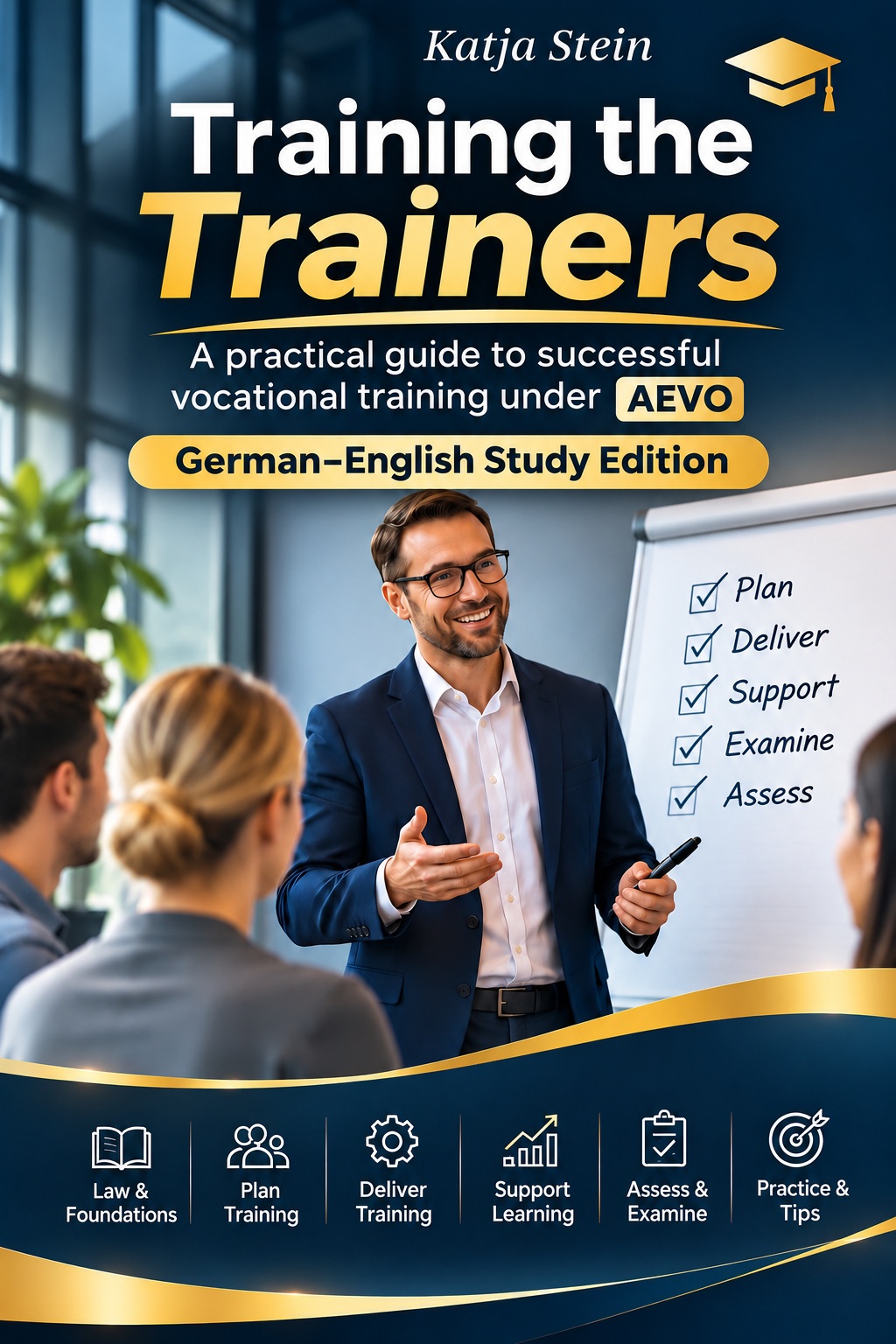
Plan vocational training and support apprentices through the four AEVO fields of action, with English explanations and German practice questions.
- Assess the suitability of the company and training staff.
- Work through training needs and company training plans.
- Structure apprentice selection, recruitment and preparation.
- Plan learning tasks, methods and learner support.
- Explore motivation, learning difficulties and performance assessment.
- Prepare completion of training and revise through German questions with bilingual answers.
Who is this book for?
For prospective and practising trainers who want English-language support for the German AEVO subject matter.
Topics you will work through
- Assess training requirements and plan training
- Prepare training and assist with recruitment
- Conduct training
- Complete training
- Legal foundations and cooperation between learning locations
- Learning objectives, practical examples and practice questions
Look inside before you buy
13 pages: front matter, the complete table of contents and selected teaching or practice pages from this edition. No purchase or registration required. The extract retains the original page numbering.
Check the edition and review-status information below before buying. The sample shows the book as offered; it is not a guarantee of examination success or completed professional review.
View table of contents
Taken from the offered edition. The chapter numbering is retained. The original formatted contents pages are also included in the free PDF sample.
- Publication Details
- Preface
- How to use this book
- 1. Assess Training Requirements and Plan Training
- Learning objectives in field of action 1
- 1.1 Present and justify the advantages and benefits of in-company training
- 1.1.1 Goals Tasks and professional competence
- 1.1.2 Direct and indirect benefits, perspectives of in-company training for the individual, the economy and society
- 1.1.3 Aspects of sustainability and future viability in the training of trainers
- 1.2 Participation in planning company training needs
- 1.2.1 Training needs with a view to corporate development and operational conditions
- 1.2.2 Importance of training in the context of personnel development
- 1.2.3 Legal regulations for vocational training
- Apply legal rules safely
- 1.3 Structures of the vocational training system and its interfaces
- 1.3.1 Structure of the German education system
- 1.3.2 Structure, responsibilities and areas of responsibility of the dual system of vocational training
- 1.3.3 Development prospects in the vocational education system
- 1.4 Select training occupations for the company and justify this
- 1.4.1 Training occupations based on training regulations
- 1.4.2 Opportunities for flexibility in training
- 1.4.3 Structure, functions and objectives of training regulations
- 1.5 Suitability of the company for training
- 1.5.1 Personal and professional suitability for training
- 1.5.2 Measures required to establish suitability
- 1.5.3 Responsibilities for suitability and cooperation
- 1.5.4 Opportunities for support in training matters
- 1.5.5 Consequences of violations of eligibility requirements
- 1.6 Assess the possibilities of using preparatory measures for vocational training
- 1.6.1 Target group-specific vocational preparation measures in training planning
- 1.6.2 Importance of vocational preparation measures for recruiting young talent
- 1.6.3 Funding opportunities
- 1.6.4 Possibilities for the operational implementation of vocational preparation measures
- 1.7 Coordination of the tasks of those involved in the training in the company
- 1.7.1 Tasks and responsibilities of those involved in the training
- 1.7.2 Co-determination rights of employee representatives
- 1.7.3 Role and function as a person accompanying the learning process in the area of tension between different expectations
- 1.7.4 Tasks and requirements for participating specialists and their integration into the training
- 2. Prepare Training and Participate in Recruitment
- 2.1 Creation of a company training plan based on the training regulations
- 2.1.1 Goals and contents of a company training plan for orderly training
- 2.1.2 Relationship between training framework plan and operational processes
- 2.1.3 Company training plan taking into account company requirements and individual learning requirements
- 2.1.4 Framework conditions of the different learning locations
- 2.1.5 Training from the perspective of promoting sustainability-related skills
- 2.1.6 – Together with training specialists, the feasibility of the training
- 2.1.7 – Implementation of training plans
- 2.1.8 – Training plans for change requirements
- 2.2 – Opportunities for participation and co-determination of employee representatives in vocational training
- 2.2.1 – Possibilities of company employee representation in vocational training
- 2.2.2 – Opportunities for the youth and trainee representatives (JAV) to participate in the area of vocational training
- 2.2.3 – Advocacy
- 2.2.4 – Rights of the company's employee representation in the selection, hiring, implementation and termination of training
- 2.3 – Determine the need for cooperation and coordinate with cooperation partners
- 2.3.1 – Collaboration with partners involved in training
- 2.3.2 – Learning location cooperation between the company and the vocational school
- 2.3.3 Cooperation with inter-company and other external partners
- 2.4 Attract applicants and select them according to professional criteria
- 2.4.1 Training marketing and career orientation
- 2.4.2 Requirements-based selection criteria
- 2.4.3 Structured and inclusive selection procedures
- 2.4.4 Legal regulations and participation in selection
- Legal standard in the selection process
- 2.4.5 – Career prospects for training applicants
- 2.5 Prepare vocational training contract and arrange for registration
- 2.5.1 – Contents of a training contract
- 2.5.2 Rights and Duties of the Training Employer and Apprentice under the Contract
- 2.5.3 – Registration of the training contract in the register of training relationships
- 2.5.4 – Registration of trainees at the vocational school
- 2.6 – Check whether parts of the vocational training can be carried out abroad
- 2.6.1 – Advantages of training periods abroad for trainees and the company
- 2.6.2 – Legal basis for training periods abroad
- 2.6.3 – Advice and support options for carrying out training abroad
- 3. Deliver Training
- Learning objectives in action area 3
- 3.1 – Create conditions conducive to learning and a motivating learning culture
- 3.1.1 Individual requirements of the trainees for the design of learning processes
- 3.1.2 Conditions conducive to learning
- 3.1.3 Development of a learning culture of self-directed learning
- 3.1.4 Role of the trainer as a supporter of the learning process
- 3.1.5 Learning through basic didactic principles
- 3.1.6 Learning processes through target agreements, strengthening motivation and securing transfer
- 3.1.7 Learning through the teaching of learning and working techniques
- 3.1.8 Reflection on learning outcomes and skills development among trainees
- 3.1.9 Feedback to and from trainees
- 3.2 Organize, design and evaluate probationary periods
- 3.2.1 Onboarding and introduction of trainees into the company
- 3.2.2 Development of the trainees' learning and work behavior during the probationary period
- 3.2.3 Consequences from the evaluation of the probationary period
- 3.2.4 Legal basis of the probationary period
- 3.3 Develop and design learning and work tasks from the company training plan
- 3.3.1 Meaning – professional competence and training in typical job tasks
- 3.3.2 Learning content from work and business processes
- 3.3.3 Learning and work tasks as well as learning objectives
- Formulate learning objectives in a verifiable way
- 3.3.4 Trainees on sustainable action in the learning and work process
- 3.3.5 Work tasks for trainees, taking individual learning needs and requirements into account
- 3.3.6 On design options in transformation processes
- 3.4 Select training methods and media appropriate to the target group and use them in a situation-specific manner
- 3.4.1 Competence-promoting training methods, in particular learning process support
- 3.4.2 Training methods and selection criteria
- 3.4.3 Size and composition of the learning group as required
- 3.4.4 Didactic concepts for training situations
- Align methods with goals and level of training
- 3.4.5 Methodical design of training situations
- 3.4.6 Use training media and resources in an appropriate method
- 3.4.7 Use of digital learning media as well as virtual and hybrid learning environments for training
- Use digital learning materials responsibly
- 3.5 Recognize and provide targeted support for learning difficulties
- 3.5.1 Learning difficulties
- 3.5.2 Possible causes of learning difficulties
- 3.5.3 – Advice and individual assistance for learning difficulties
- 3.5.4 Support during training
- 3.5.5 Options for adjusting the training time and duration
- 3.5.6 Support and funding options for disabled people
- Differentiate part-time extension, shortening and earlier examination
- 3.6 Additional training offers, additional qualifications and options for shortening training
- 3.6.1 Special requirements and talents for trainees
- 3.6.2 High-performing trainees with additional offers
- 3.6.3 Requirements for shortening or early admission to the final examination
- 3.6.4 If shortened, the remaining training duration
- Limitations of learning advice
- 3.7 Promote social and personal development of trainees
- 3.7.1 Importance of the company for the socialization of trainees
- 3.7.2 Developmental tasks of young people in training
- 3.7.3 Development-typical behavior of trainees and significant social influences
- 3.7.4 Communication processes, communication skills and reflection on communication behavior
- 3.7.5 Recognize unusual behavior and conflict situations in good time
- 3.7.6 Strategies for dealing constructively with conflicts
- 3.7.7 Appreciation of others, taking social diversity into account
- 3.7.8 Trainees on how to deal constructively with contradictions
- 3.7.9 Measures to avoid dropping out of training
- 3.8 Determine and evaluate performance
- 3.8.1 Forms of learning assessment for determining and evaluating performance
- 3.8.2 Learning assessments
- 3.8.3 Error of judgment
- 3.8.4 Evaluate the results of the learning processes and learning behavior in a criteria-oriented manner
- 3.8.5 Measures from learning needs discussions
- 3.8.6 Results of external performance controls
- 3.8.7 Training records for control and promotion
- 3.9 Promote intercultural skills
- 3.9.1 Be open to all cultures
- 3.9.2 Appreciation of others, taking social diversity into account
- 3.9.3 Trainees in the development of intercultural competencies
- 4. Complete the Apprenticeship
- Learning objectives in field of action 4
- 4.1 Prepare trainees for the final or journeyman examination
- 4.1.1 Requirements for examinations and examination instruments from the training regulations
- 4.1.2 Meaning and procedure of the final examination
- 4.1.3 Composition and tasks of examination committees
- 4.1.4 Support for exam preparation and avoiding exam failure
- 4.2 Registration for examinations and information on special features relevant to implementation
- 4.2.1 Registering trainees for the exams
- 4.2.2 Conditions for release from training duties
- 4.2.3 Conditions for early admission to the final examination
- 4.2.4 Requirements for repeat testing
- Training completion and continued employment
- 4.3 Participation in the preparation of a written certificate
- 4.3.1 Importance of certificates for trainees
- 4.3.2 Simple and detailed training reference
- 4.3.3 Certificates based on operational assessments
- 4.3.4 Consequences of certificate formulations
- 4.4 Transition to work or further training
- 4.4.1 Acceptance into an employment relationship
- 4.4.2 Professional and company development opportunities
- 4.4.3 Importance of continuing professional education and training
- 4.4.4 Funding opportunities for vocational training and further education
- Preparing for the AEVO Trainer Aptitude Examination
- Planning and Justifying a Training Session
- Preparing for the Professional Discussion
- Transfer Case 1 Assessing Training Capacity
- Transfer Case 2 Selecting Applicants Fairly
- Transfer Case 3 Addressing Learning Difficulties
- Transfer Case 4 Distinguishing Examination Results and the End of Training
- Templates for Workplace Training
- Learning Assignment and Assessment
- Observation Notes for a Feedback Meeting
- Checking Examination Arrangements
- Sources and further original information
- Other Books from Deine-Akademie24
Further edition and purchase information
German–English study edition by Katja Stein covering vocational training in Germany. Work through the four AEVO fields of action with explanations, practical questions and bilingual answers. This is a German–English edition, not an English-only book.
PDF with cover and back cover. 431 pages. Katja Stein · First edition.
Deine AEVO-Vorbereitung strukturiert planen
Nutze den kostenlosen AEVO-Lernleitfaden mit offiziellen Prüfungsquellen, um Themen und Wiederholungen zu ordnen. Kurse und Prüfungsbücher vergleichen.